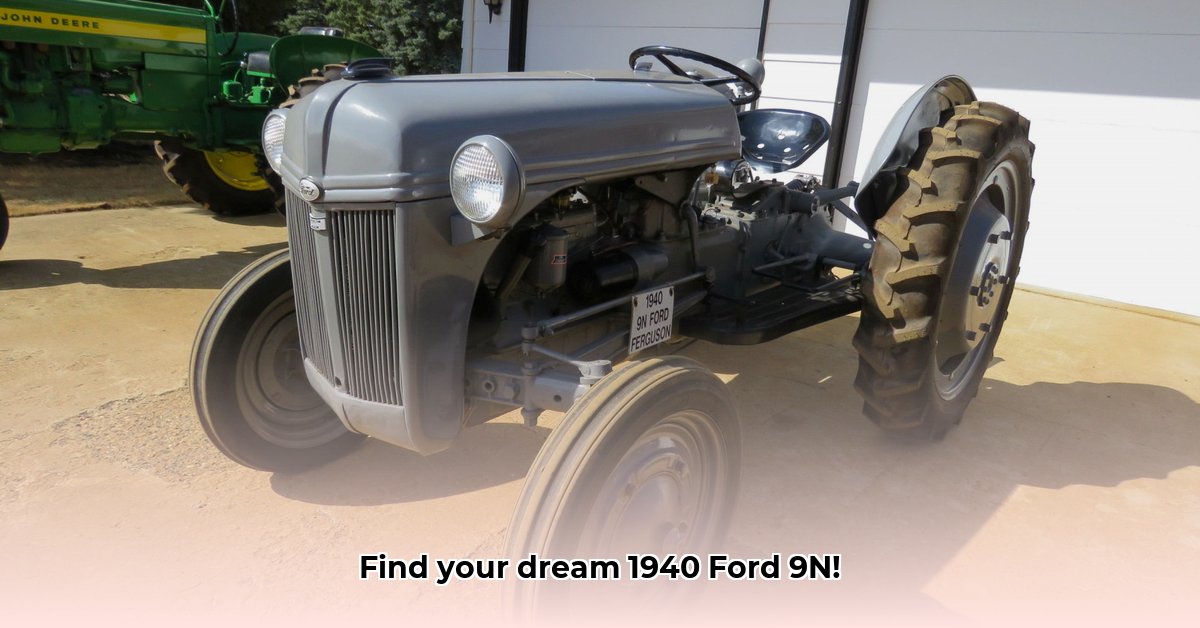
Finding the right 1940 Ford 9N tractor can be an exciting journey. This guide provides actionable steps to help you navigate the market, whether you're a seasoned collector or a first-time buyer. From assessing condition to securing financing, we'll cover everything you need to know to find your perfect match. For more Ford tractor history, see this helpful resource.
Section 1: Introduction to the Ford 9N Tractor
The Ford 9N, produced from 1939 to 1942, revolutionized farming. Approximately 99,002 units were manufactured, solidifying its place in agricultural history. Its 26.5 horsepower engine (though advertised horsepower can vary) and innovative three-point hitch system were groundbreaking for their time. Today, the 9N remains a highly sought-after collectible, appreciated for its historical significance and enduring mechanical charm. Understanding its history and key features is the first step in your search.
Section 2: Assessing a Ford 9N Tractor
A thorough pre-purchase inspection is crucial. Don't rely solely on photos and descriptions; a hands-on assessment is essential to avoid costly surprises.
Key Inspection Points:
Engine: Check for oil, fuel, and coolant leaks. Assess compression; low compression indicates potential engine problems. A clean engine bay suggests good maintenance. Listen for unusual noises during operation.
Transmission: Shift through all gears. Smooth shifts are good; grinding or difficulty indicates transmission issues.
Body: Inspect for rust, dents, and missing parts. Original paint, if preserved, adds significant value. Document your findings with photos.
Hydraulics: Test the three-point hitch (if present) thoroughly. Smooth operation is paramount; leaks or malfunctions can be expensive to fix.
Accessories: Original accessories, such as a PTO (power take-off), significantly increase value. Note the condition and functionality of all accessories.
Documentation: Original owner's manuals, service records, and even old photos significantly impact value and authenticity. They provide a history of the tractor's care and maintenance.
Remember: Advertised horsepower figures can be inconsistent. Focus on the engine's actual condition and performance during your inspection.
Section 3: Navigating the Market
Finding your 9N involves researching various avenues:
Where to Buy:
- Online Auctions (e.g., TractorHouse, eBay): Offer wide selection but require careful scrutiny due to the potential for inaccurate listings. Always ask detailed questions and request numerous high-resolution photos.
- Private Sellers: Direct connection with owners may result in more transparent sales and potentially better-maintained tractors. However, thorough due diligence remains essential.
- Specialized Dealers: Provide expert knowledge and potentially restored tractors, but typically command higher prices.
What to Look For:
Use the checklist from Section 2. Prioritize tractors with good overall condition, original parts, and complete documentation. Be wary of tractors with significant rust or missing parts, as these can lead to expensive repairs or restorations.
Pricing:
Prices vary significantly based on condition and originality. Project tractors might sell for under $1,000, while meticulously restored examples can exceed $13,000. Research recent sales of comparable tractors to establish a fair market value. A visual representation of price ranges (e.g., a chart) would be beneficial for readers.
Negotiating:
Be prepared to negotiate. Research helps establish your upper limit and strengthens your negotiating position. Remember to be respectful but firm.
Financing and Insurance:
Specialized lenders offer financing options for classic tractors. Securing insurance requires contacting multiple providers, as it's a niche market.
Section 4: Owning and Maintaining a Ford 9N
Owning a Ford 9N is a rewarding experience, but it requires commitment.
Parts Sourcing:
Online forums dedicated to Ford 9N tractors are invaluable resources for locating parts. Specialized parts dealers and even 3D printing offer options for hard-to-find components.
Restoration Tips:
If restoration is planned, research reputable shops specializing in vintage tractors. Restoration projects are often costly and time-consuming. Budget carefully and set realistic expectations.
Maintenance:
Regular maintenance is crucial. This includes oil changes, fluid checks, and thorough inspections. Preventative maintenance saves money in the long run.
Community Resources:
Engage with online forums and clubs dedicated to Ford 9N tractors. These communities provide invaluable support, advice, and resources.
Conclusion:
Finding your dream 1940 Ford 9N tractor is achievable with thorough research, careful inspection, and smart negotiation. This guide provides the tools you need to embark on your journey confidently, ensuring you find a classic machine worthy of its history and your passion.